






The Clean Cannabis Company operates a sophisticated 12,000-square-foot cannabis cultivation facility in Vermont. Their mission is to offer consumers the cleanest cannabis, all while improving their sustainability and reducing their environmental footprint. Owners Devin Dannat and Derek Porter did extensive research and worked closely with building professionals and Efficiency Vermont to design an energy-efficient building. Sustainable innovations in their operations include specific building orientation for optimized solar exposure, liquid-cooled LED grow lights that cut their air conditioning usage in half and radiant that runs through their concrete sidewalks to help with cooling those lights in the winter. Their dedication to sustainability earned Clean Cannabis recognition as the Best of the Best in Commercial Building Design & Construction by Efficiency Vermont for their Better Buildings by Design conference.
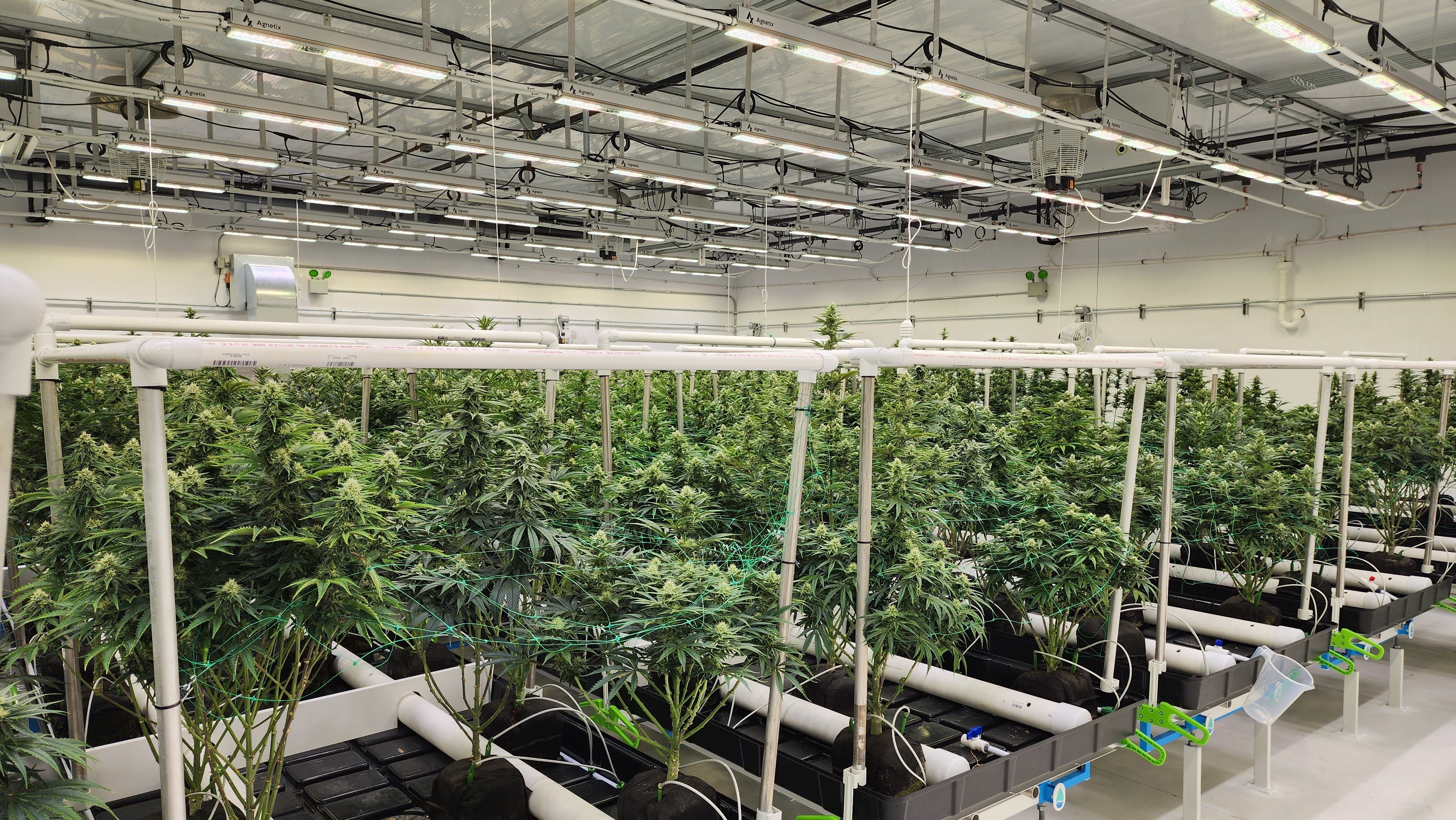
In addition to energy efficiency and no fossil fuels, Dannat and Porter seek other ways to improve their sustainability including looking into vertical integration and chemical reduction.
Clean Cannabis was spending about 25-35 hours per week on labor to clean algae, biofilm and pathogens in source water tanks. The team also had to change out irrigation lines and emitters that were clogged with biofilm. They decided they needed a solution that would fit their clean cannabis mission.
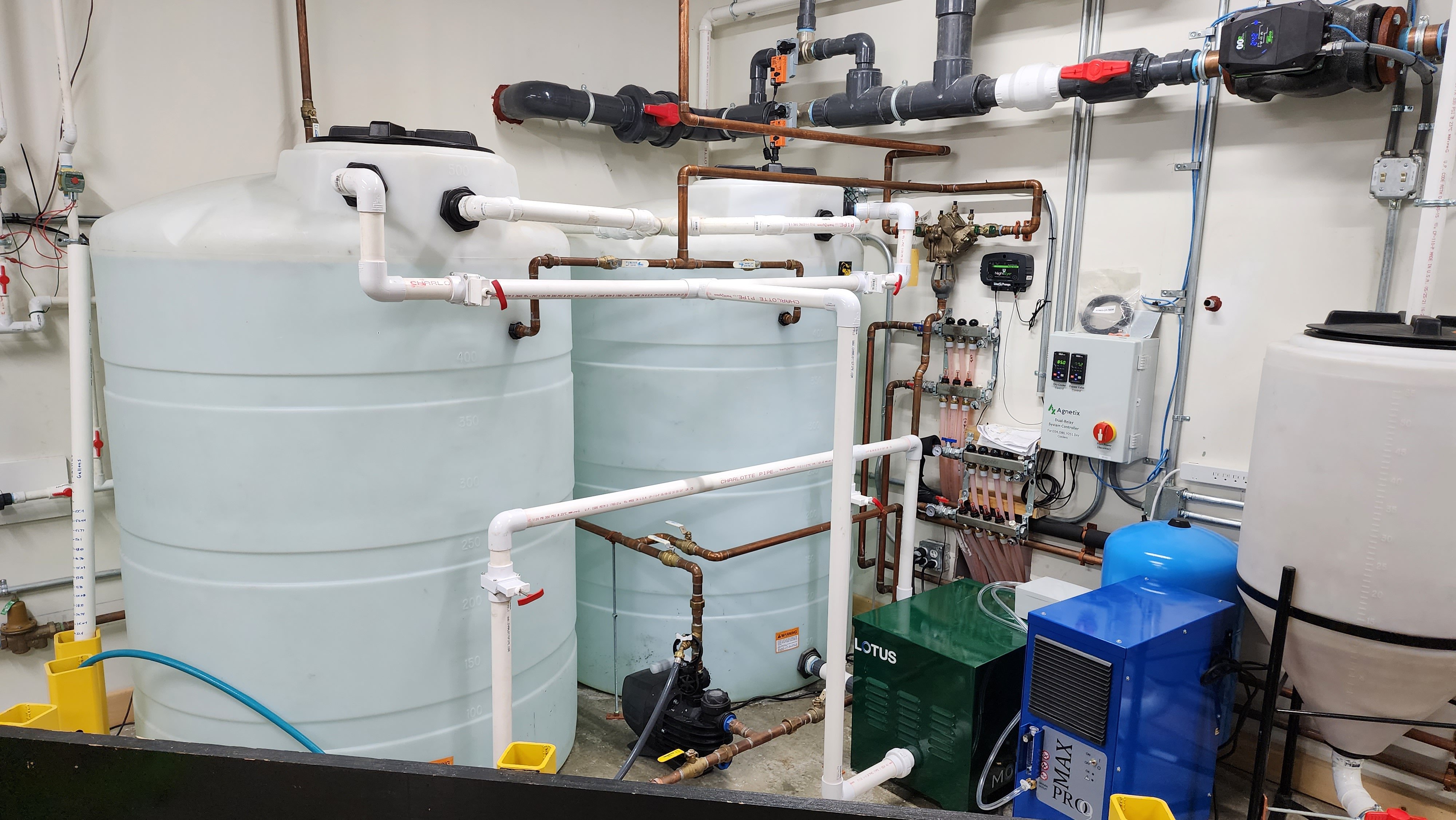
Much thought and research went into a fix before they turned to Moleaer’s Lotus nanobubble generator, a chemical-free, affordable water treatment solution. The Lotus was installed on their ≈1000-gallon day tank to recirculate their irrigation water during watering plus other strategic 15-minute cycles, maintaining 25-30 PPM of dissolved oxygen.
Nanobubbles have hard, stable surfaces allowing them to naturally abrade biofilm from irrigation piping walls and prevent it from reforming. When they come into contact with contaminants in the water, such as free-floating biofilm, water-borne pathogens or algae, they become unstable and collapse. Thus, forming a mild, natural oxidant that destroys and inactivates these contaminants.
The Clean Cannabis Company was able to reduce the labor needed for cleaning, among other benefits. After installing the Lotus, they now only need to change one or two emitters during the flowering cycle, an 8–9-week period and have completely reduced the need to clean the source tank and irrigation lines. This benefit allowed them to see an ROI in just 9 weeks.
“Being able to no longer worry about clogged emitters is huge,” says Porter. “That, combined with the optimal Dissolved Oxygen levels maintained in our tanks, have improved our grow quality overall. All while avoiding any unwanted additives or chemicals.”
Another benefit, besides biofilm and pathogen reduction, is that nanobubbles have electrochemically charged surfaces that attract them to nutrients and fertilizers in irrigation water. This helps to reduce settling and improve mobility to the root zone.
Moleaer’s nanobubble technology has highly efficient gas-to-liquid transfer, allowing growers to take advantage of increased dissolved oxygen (DO) levels. The benefits of DO for crops are well-known in the industry to help increase root respiration, improve root health and development and increase crop yield.
Clean Cannabis grows their crops in gallon-size coco coir blocks. Prior to nanobubble technology the root systems did not benefit from maximum aerial pruning. Since using nanobubble-enriched irrigation water, they’ve seen healthier root systems growing in the blocks with optimal aerial pruning and structure. Overall, they’ve seen healthier, cleaner root systems and more efficient nutrient uptake.
“We recommend nanobubble technology to other cannabis growers looking to reduce labor and inputs for biofilm and pathogen control,” shares Dannat. “We continue to seek ways we can innovate to improve sustainability and efficiency and have even begun brainstorming ways nanobubbles can be brought into other parts of our cannabis company."
Download PDF Now