




From irrigation in the field to produce wash water, improving water quality strengthens food safety throughout fresh produce production.
The current multistate Cyclospora outbreak linked to shredded iceberg lettuce has once again placed food safety in the national spotlight. While investigators continue their work, the outbreak highlights an ongoing reality for growers and processors: preventing contamination is far more effective than responding after it occurs.
Water sits at the center of that challenge.
From irrigation in the field to produce washing and processing, water touches nearly every stage of fresh produce production. Improving water quality isn't a replacement for Good Agricultural Practices (GAPs), sanitation programs or regulatory compliance, but it is an increasingly important layer of protection.
As the food industry continues to strengthen preventive food safety programs, many growers and processors are also looking for ways to improve water quality, enhance the performance of existing sanitation programs, and build more resilient operations.
Why Water Quality Matters for Food Safety
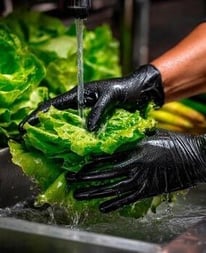 Water is one of the most important inputs in food production.
It's used to irrigate crops, wash harvested produce, transport products through processing lines, clean equipment and maintain hygienic conditions throughout processing facilities.
When water quality declines, the potential for contamination increases. That's why effective water management is a critical component of any comprehensive food safety program.
As consumer expectations continue to rise and regulatory oversight evolves, processors are investing in technologies that strengthen existing food safety programs while improving operational efficiency and sustainability.
How Ozone Nanobubbles Improve Produce Wash Water
Moleaer's NOVO₃ solution combines ozone with nanobubbles to enhance produce wash water and process water quality.
Unlike conventional bubbles, nanobubbles remain suspended in water for extended periods, increasing ozone transfer efficiency and maximizing contact throughout the treatment process. The result is more efficient ozone transfer and highly effective sanitation.
NOVO₃ helps processors:
-
Achieve 4–5 log (99.99–99.999%) pathogen reduction against common foodborne microorganisms
-
Improve produce wash water quality
-
Reduce cross-contamination risks in wash systems
-
Eliminate chemical storage and handling
-
Leave no harmful chemical residues
-
Operate automatically with minimal operator intervention
NOVO₃ provides a clean, residue-free sanitation solution that supports both food safety and sustainability objectives.
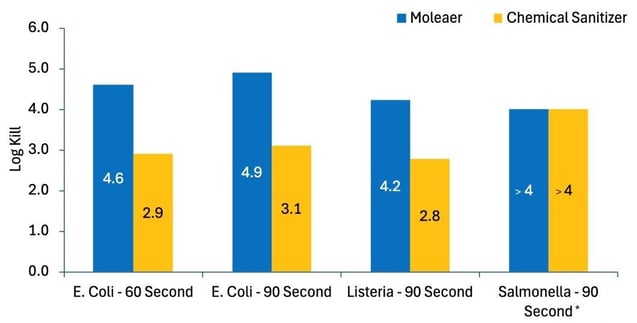
Compared against a leading sanitizer following manufacturer soak protocol
(7 mg/L lactic aciddose and 90-second contact time) under controlled laboratory testing.
Learn more about ozone nanobubbles here: https://www.moleaer.com/blog/nanobubbles/ozone-nanobubbles
Food Safety Starts in the Field
Food safety doesn't begin in the processing plant.
The quality of irrigation water plays an important role in producing healthy crops and maintaining clean, reliable irrigation systems throughout the growing season.
Moleaer's nanobubble technology also improves irrigation water quality by increasing dissolved oxygen and supporting healthier biological conditions within irrigation systems. Growers also use the technology to reduce algae and biofilm, helping improve irrigation water quality and reduce the potential for waterborne pathogens to enter the field, while supporting existing water management practices.
Better water supports healthier crops and creates a stronger foundation for food safety throughout the supply chain.
Building More Resilient Food Systems
The current lettuce outbreak is an important reminder that food safety requires a multi-layered approach. Water quality, sanitation, facility design, employee practices, and supply chain management all play essential roles in protecting consumers.
No single technology can eliminate every source of contamination. But better water management can strengthen food safety programs while helping facilities reduce chemical use, operating costs and environmental impact.
Across agriculture and food processing, Moleaer's nanobubble technology is already helping customers improve water quality while enhancing the performance of existing treatment and sanitation programs.
As the food industry continues to invest in prevention, we're proud to help growers, food processors and food service operators improve water quality from the field to the final product.
Learn more about Moleaer's food safety solutions and ozone nanobubble technology at www.moleaer.com/NOVO3
👉 Contact us or explore our Food & Beverage Solutions.

