




Large-Scale Nanobubble Oxygenation Treatment Reduces HABs, Restores Recreation and Supports Local Economy

Lake Elsinore, located at the base of the San Jacinto River watershed, is the largest lake in Southern California. For years, the lake experienced severe water quality challenges driven by excessive nutrient loading, persistent harmful algal blooms (HABs), and dangerously low dissolved oxygen levels. These conditions resulted in multiple toxin advisories and lake closures significantly impacting recreation and the local economy.
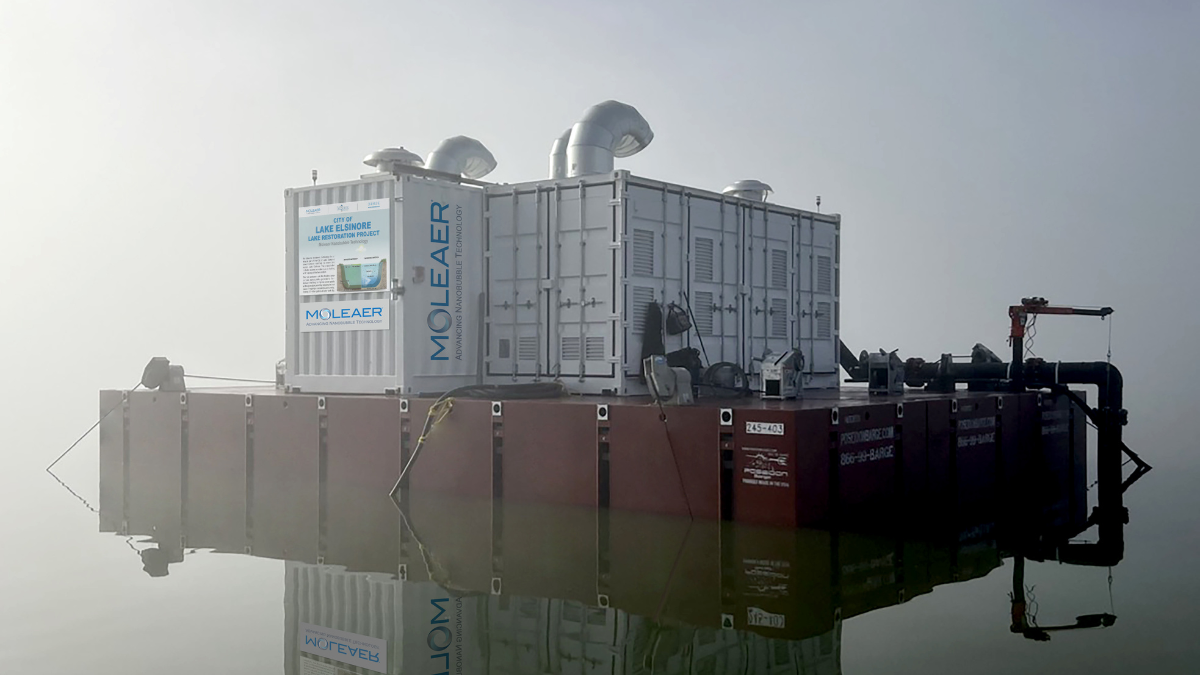
The City of Lake Elsinore worked with Moleaer to deploy nanobubble treatment systems in a phased approach. These systems address the challenges plaguing the lake by increasing oxygen levels, even at depth, to mitigate internal nutrient release, increase muck digestion and improve water quality.
Total Treatment: 3.5 million gallons of water per day
Oxygen: 1,320 lbs of oxygen per day
Total Treatment: 6.5 million gallons of water per day
Total Oxygen: 5,500 lbs of oxygen per day
Total Treatment: 39 million gallons of water per day
Total Oxygen: 15,000 lbs of oxygen per day
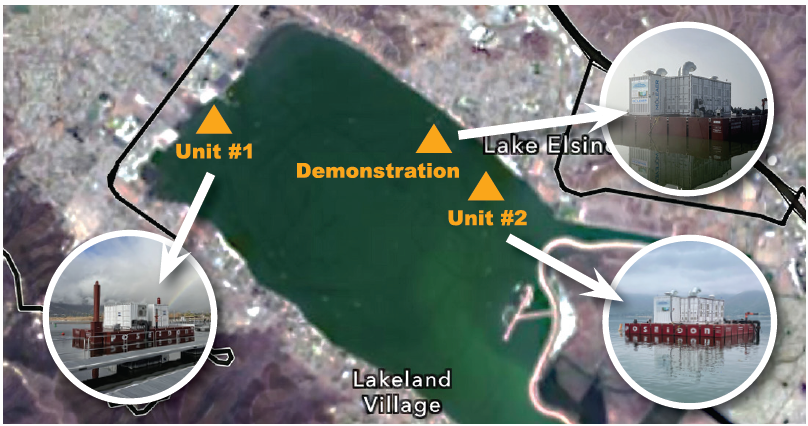
Today, Lake Elsinore represents the largest publicly regulated water body in the United States with a permanent nanobubble technology installation, establishing a databacked model for large-scale surface water restoration.
A rigorous monitoring program was established through collaboration between the Elsinore Valley Municipal Water District (EVMWD), the City of Lake Elsinore, Moleaer, and GEI Consultants.
Sustained oxygenation is critical to prevent the release of phosphorus from sediments that fuel algal growth. Nanobubble technology increased and stabilized dissolved oxygen levels throughout the water column:
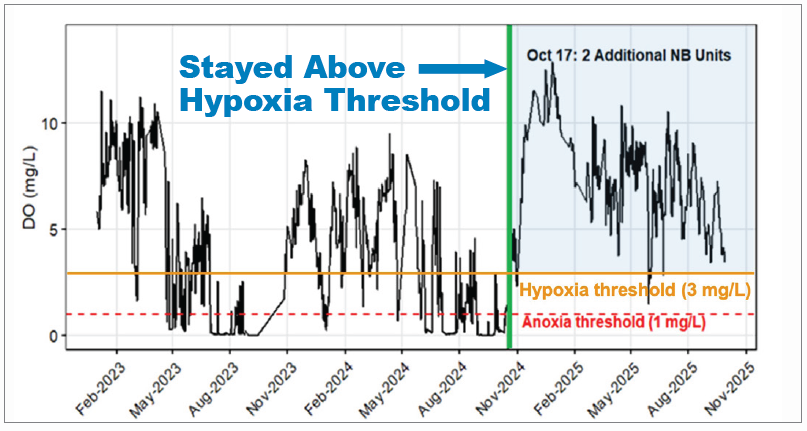
Data from EVMWD. Sensors at 3-6 m below the water surface at the Lakeshore Buoy, near the center of Lake Elsinore.
Increased DO and ORP led to a decrease in nutrients
TMDL compliance for total Phosphorus
Total nitrogen was reduced by 50%, from 5.0 mg/L to 2.5 mg/L
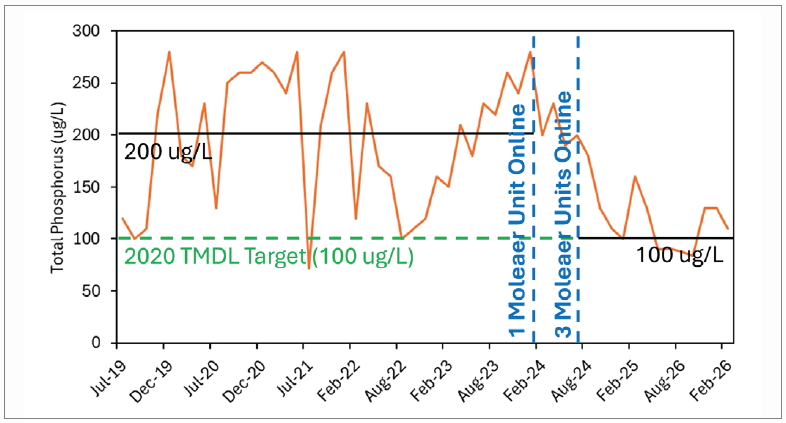
Lake Elsinore TMDL monitoring conducted by GEI Consultants on behalf of EVWMD.
Turbidity measurements at all monitored depths significantly decreased following deployment of additional nanobubble treatment units in October 2024, indicating improved water clarity throughout the lake.
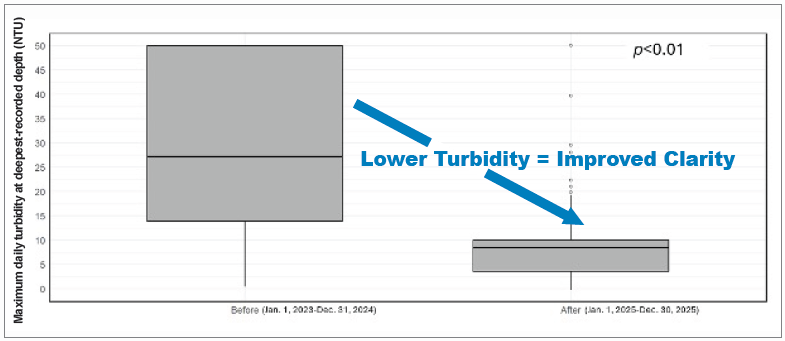
Daily maximum turbidity (NTU) prior to and after extended nanobubble treatment.
The most significant improvements were observed in measures of harmful algal blooms and associated toxins:
8x reduction in algal toxins
75% reduction in cyanobacteria biomass, as shown in modified cyano index (satellite image-derived)
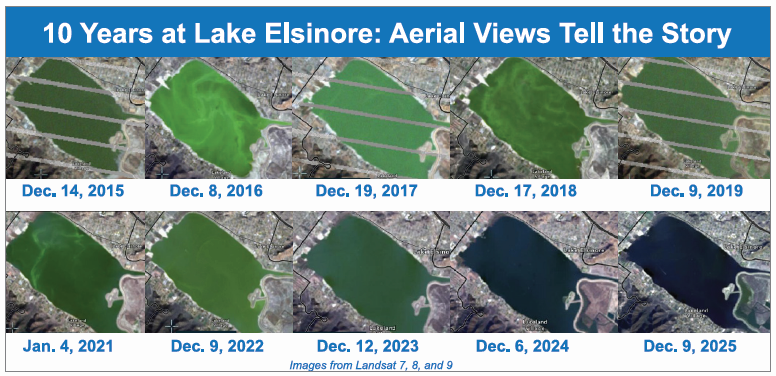
Landsat imagery of Lake Elsinore in December from 2015 to 2025, showing significant water clarity improvements and reduced algal blooms.
These improvements represent a substantial change in lake conditions. The reduction in microcystin concentrations from levels associated with elevated health risks to levels below EPA recreational advisory thresholds, enabled the lake to remain open throughout the critical summer recreation season.
The success of nanobubble treatment has catalyzed significant economic investment in Lake Elsinore, reinforcing the connection between environmental restoration and community prosperity. The City reports approximately $900 million in new private investment across housing, commercial development, and tourism-related infrastructure.
Adam Gufarotti, the City’s Assistant Director of Lake & Community Operations, noted:
“Restoring Lake Elsinore has done more than improve water quality, it’s restored confidence in our community’s future. We’re now seeing $900 million in new investment flowing into housing, businesses, and attractions. For our residents, that means more local jobs, better amenities, and a community that’s truly thriving. It’s proof that when you prioritize your natural resources, everyone benefits.”
Lake Elsinore serves as a model for how innovative technology, adaptive management, and community commitment can restore severely impaired water bodies. The City has made Moleaer nanobubble technology a foundational component of its long-term lake management plan, with continued expansion planned for 2026 and beyond.
This project represents a collaborative effort by the City of Lake Elsinore, Elsinore Valley Municipal Water District, GEI Consultants, and Moleaer’s dedicated team. Their commitment to innovation and adaptive management is setting a new standard for restoring and protecting valuable freshwater resources.
Download the Lake Elsinore Case Study