






Pokegama Lake, a 1521-acre lake located near Pine City, Minnesota, is an important recreational resource for the community. Residents and visitors use the lake for fishing, boating, swimming and other activities.
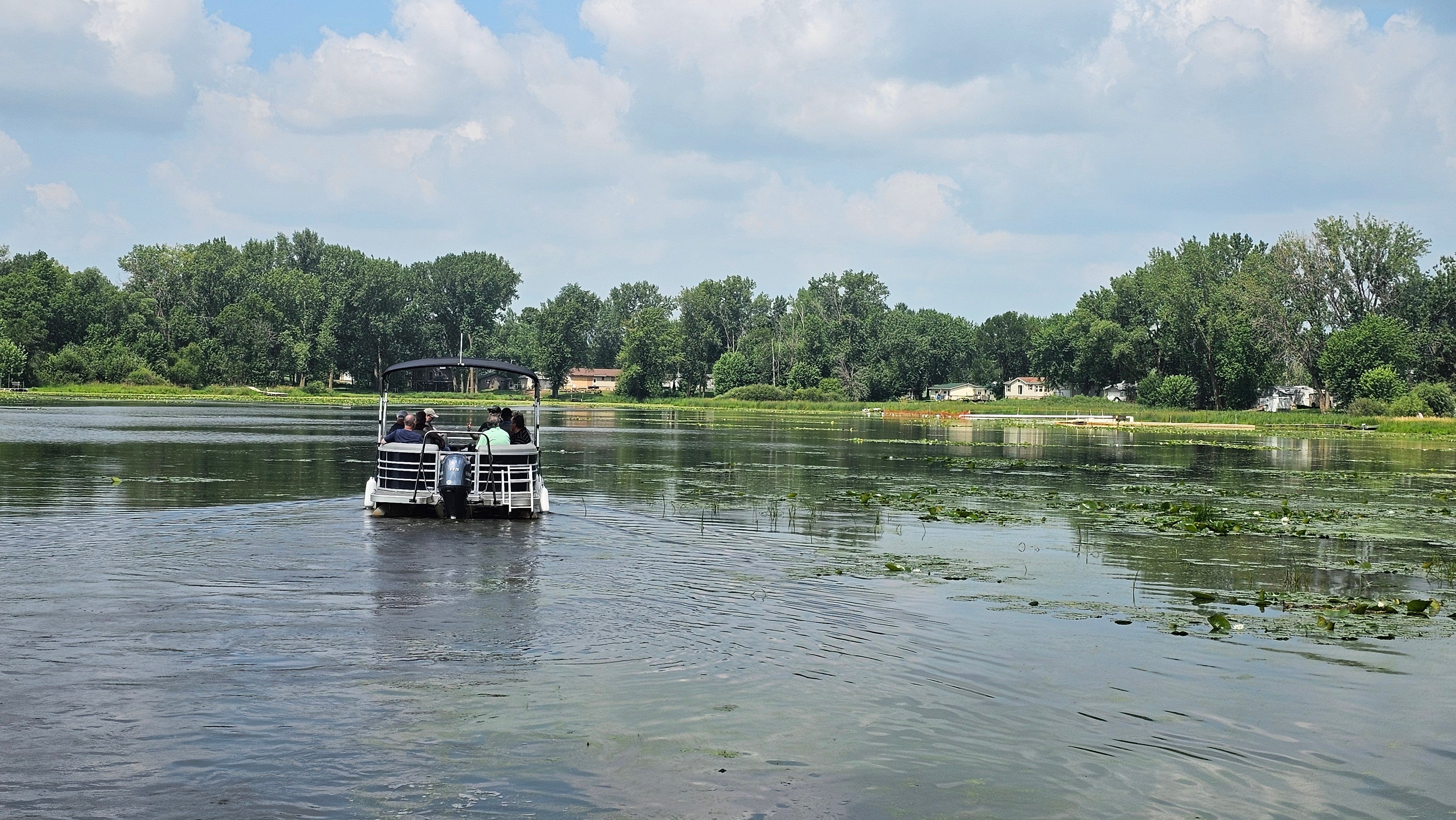
However, excessive nutrient loading has led to frequent harmful algal blooms and poor water clarity. The lake was first listed on Minnesota’s 303(d) impaired waters list in 2004 and remains classified as EPA-category 5-impaired for excess total phosphorus and degraded fish habitat as of 2024.
The Pokegama Lake Association (PLA), the local non-profit organization dedicated to protecting and improving the lake, has explored several approaches to address these challenges.
"In the past, our only option to address the algal blooms has been alum treatment,” shared Kathy Nielsen with the PLA, “We need a real solution, not a Band-Aid."
In summer 2025, the PLA sought a sustainable solution to combat these challenges. They partnered with Moleaer to deploy a nanobubble treatment trailer in the northeastern most bay of the lake, an area characterized by substantial organic matter (muck) accumulation, reduced water clarity, and recurring algal blooms.
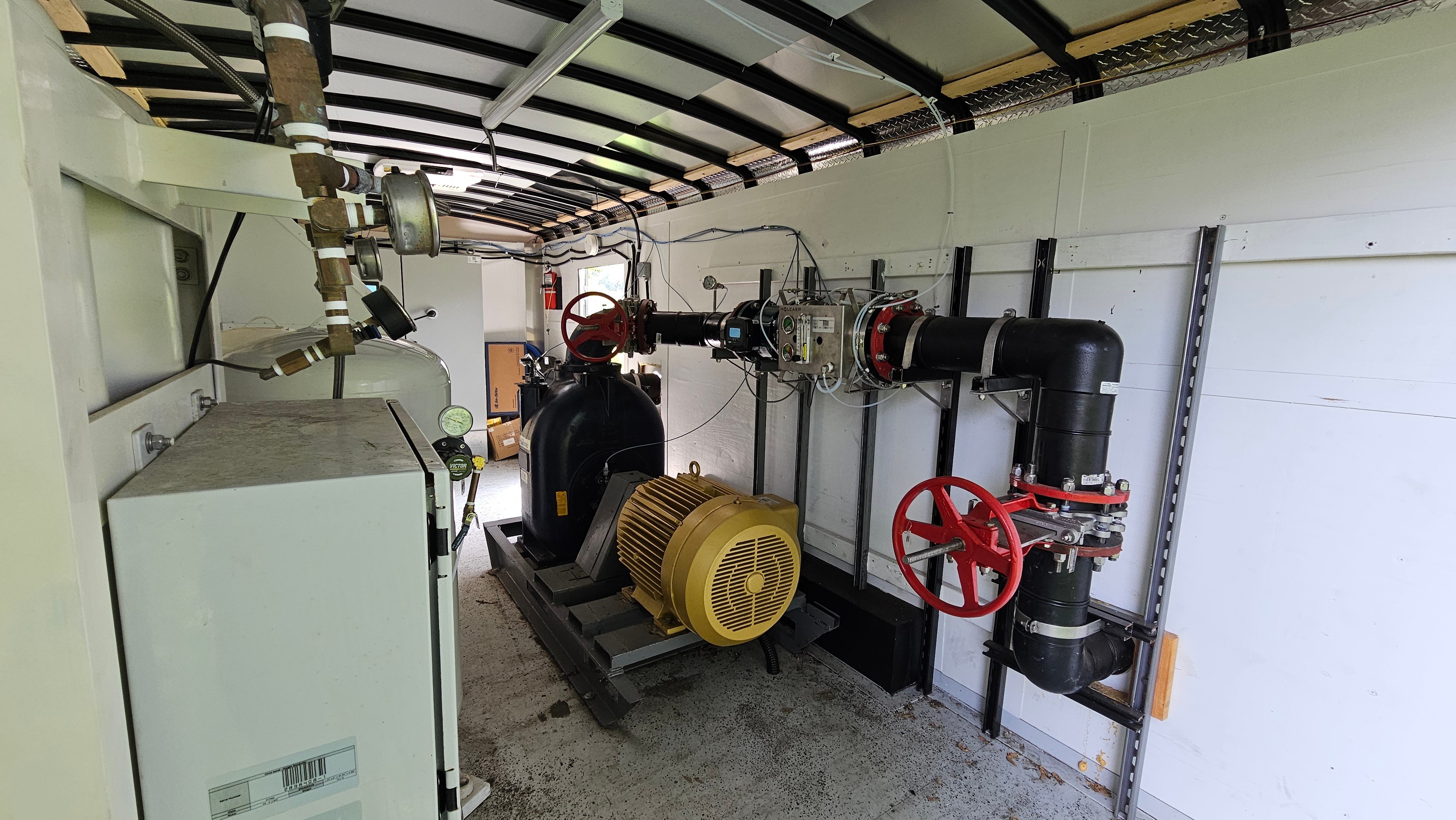
The treatment system draws lake water through a nanobubble generator, injecting oxygen and discharging nanobubble-oxygenated water back into the lake to produce high concentrations of dissolved oxygen, creating and maintaining aerobic conditions that support natural lake processes and build resiliency against problems like algal blooms, all without harsh chemicals. A comprehensive water quality monitoring plan was implemented in collaboration with Blue Water Science to evaluate the technology’s effectiveness at breaking down accumulated muck, limiting nutrient release and reducing algal blooms, and to assess the feasibility of expanding treatment to the whole lake.

Monitoring documented significant differences between the nanobubble treatment area and the main basin of the lake, the untreated control area.
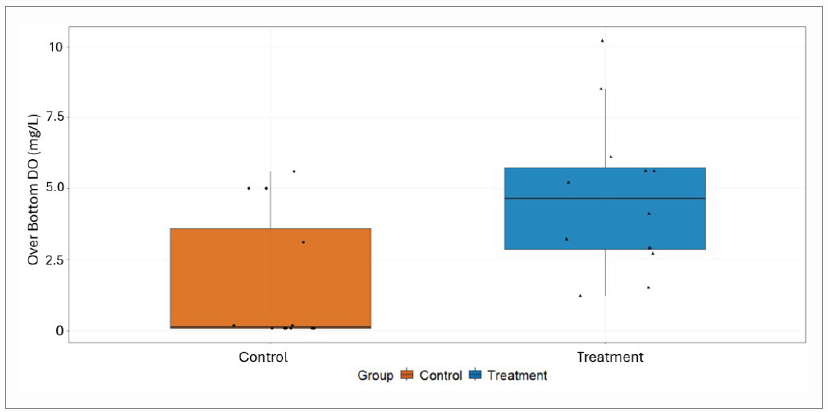
Maintained a median DO concentration of 4.9 mg/L near the sediment–water interface in the treatment area, 30x higher than the main basin at 0.1 mg/L
Daily minimum DO levels remained above anoxic (> 1 mg/L) and hypoxic (> 3 mg/L) thresholds for approximately 3 times longer
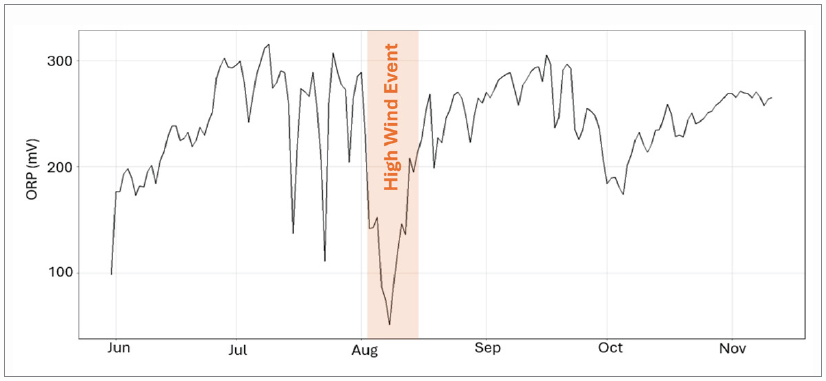
ORP levels increased rapidly after treatment began and nearly doubled within the first month
ORP levels remained above 200 mV for most of the treatment period, indicating strongly oxic conditions in the bottom waters
In contrast, ORP in the main basin remained below 0 mV for most of the same period, conditions that favor phosphorus release from sediments
30% fewer cyanobacteria cells
3x lower microcystin (algal toxins) concentrations
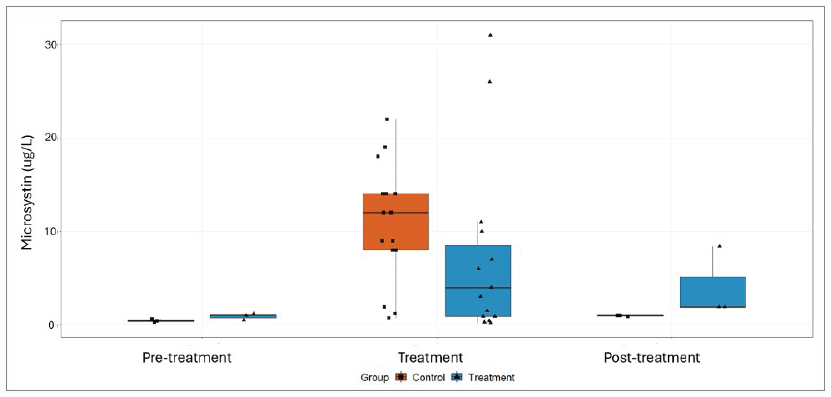
These results are especially significant considering the persistent challenges during the treatment period: continuous external nutrient loading from Pokegama Creek, wind-driven transport of cyanobacteria from the main basin into the treatment area, and water temperatures that remained favorable for cyanobacterial growth.
Despite continuous nutrient inflow from Pokegama Creek, the median orthophosphate concentrations (readily available phosphorus) were lower in the treatment area (8 μg/L) than in the control area (20 μg/L).
Improved ecological diversity
3x higher eukaryotic (non-blue-green) algal cell counts, indicating a more diverse and balanced phytoplankton community
The 2025 nanobubble treatment at Pokegama Lake demonstrated measurable improvements across key water quality parameters, increasing bottom dissolved oxygen, improving redox conditions, moderating internal phosphorus loading, reducing algal bloom severity and toxicity, and promoting a more diverse phytoplankton community. These results demonstrate that nanobubble technology can meaningfully support lake restoration and provide a strong foundation for expanded treatment at Pokegama Lake and other nutrient-impaired water bodies.
Download Now