





Yakima, Washington, renowned for its rich agricultural heritage, particularly in apple cultivation, has long been at the forefront of adopting innovative technologies to improve crop quality and sustainability. Moleaer has proven the successful integration of nanobubble technology into apple flume washing processes at Gilbert Orchards, which resulted in improved water usage efficiency, product quality, and overall sustainability in the local apple industry.
The traditional apple-washing process involves using large amounts of water to remove dirt, debris, and pesticides from the apples before packing. This process, while effective, is water-intensive and can lead to product shrinkage from bruising and abrasion during washing. Additionally, suspended solids in the water can affect water clarity, which is crucial for accurate product quality and food safety assessment.
Nanobubbles, tiny oxygen or ozone bubbles measuring approximately 100nm in diameter, have emerged as a groundbreaking solution to address these challenges. Their unique properties, including long-lasting stability and remarkable cleaning capabilities, make them an ideal candidate for improving the apple flume washing process.
Recognizing the potential benefits of nanobubble technology, an apple producer in Yakima, WA collaborated with Moleaer to integrate nanobubbles into their flume washing operations. Ozone and oxygen nanobubbles were injected into the flume water supply, creating the most robust processing water.
The implementation of nanobubble technology yielded remarkable improvements across multiple key parameters:
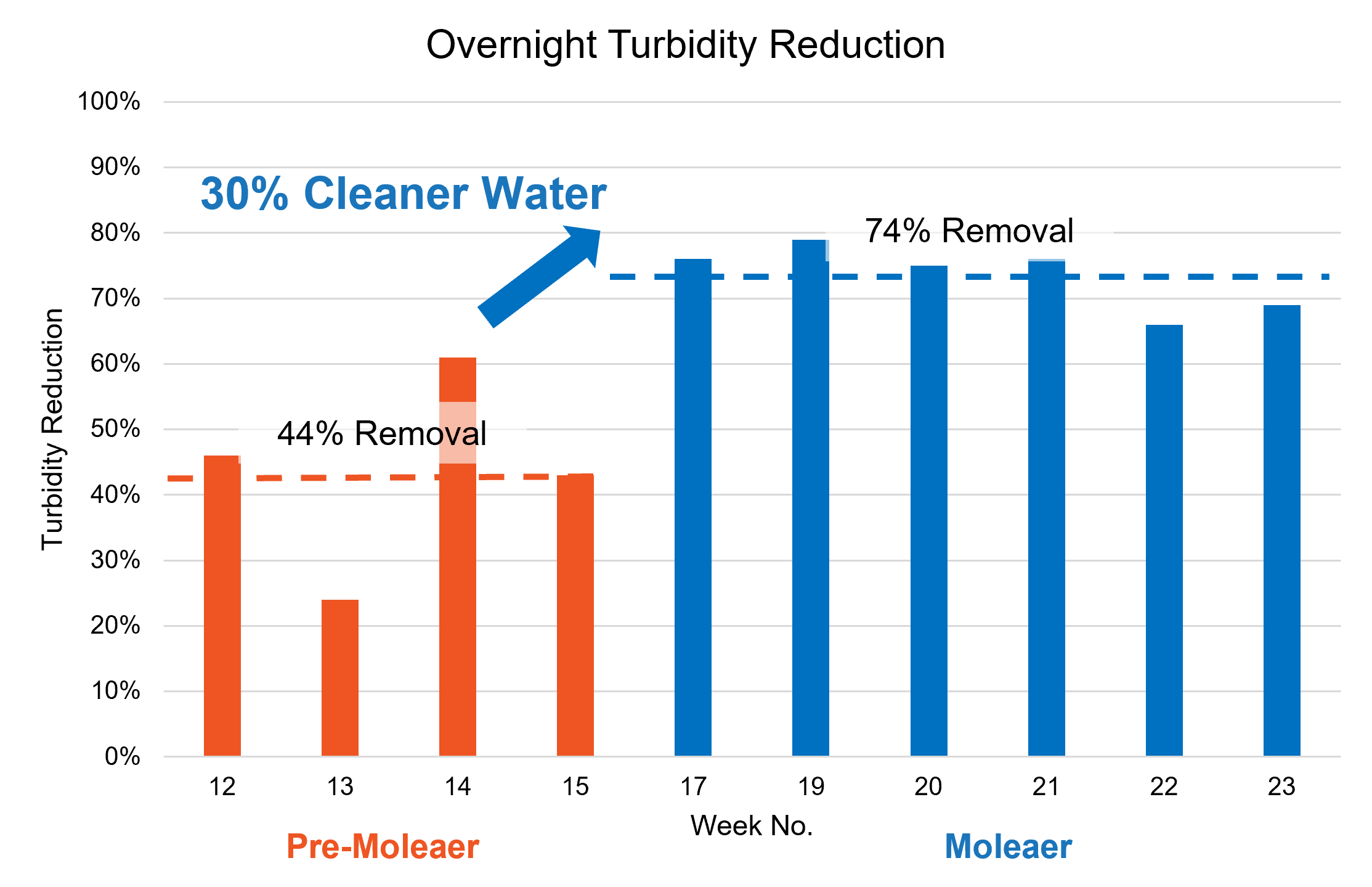
Nanobubbles removed suspended solids, or turbidity, from the flume water with unparalleled efficiency. The pilot trial revealed that nanobubbles were able to achieve a 60% better removal of suspended solids when compared to traditional washing methods. This significant reduction in turbidity contributed to improved water clarity.
Nanobubbles had a profound impact on water clarity. Results showed an impressive 30% enhancement in water clarity, enabling the plant to extend the life of its processing water and achieve visible improvements in water quality.
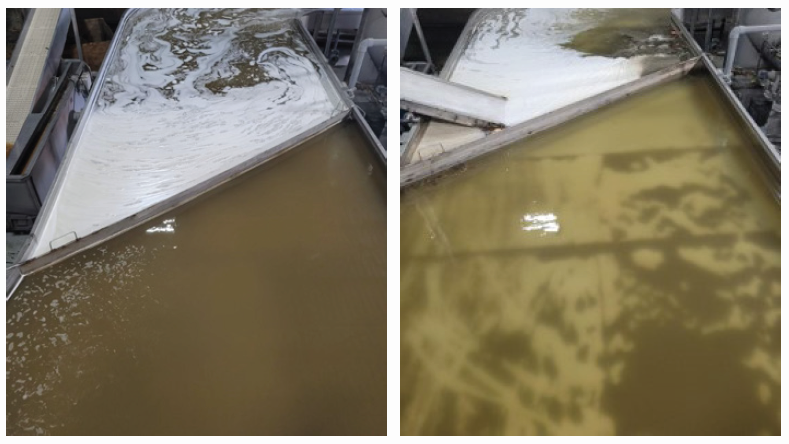 Flume water before and after enriching with oxygen and ozone nanobubbles shows clarity improvements.
One of the most notable benefits of integrating nanobubbles was the substantial reduction in water usage. With traditional methods, water waste was a significant concern. However, nanobubbles reduced water usage by an impressive 50%, a development that not only conserved a valuable resource but also contributed to cost savings and enhanced sustainability.
“Moleaer is playing an integral part in helping us to meet compliance standards by reducing water usage, and improving biological oxygen demand (BOD) and total supsended solids (TSS) discharge levels,” states Craig Anderson, project manager at Gilbert Orchards.
The successful integration of nanobubble technology into apple flume-washing processes exemplifies how innovative solutions can revolutionize traditional agricultural practices. The use of nanobubbles not only addressed challenges related to suspended solids, and water clarity, but also significantly contributed to water conservation and overall sustainability in apple production.
Download Case Study